
Caffeine and Performance: How Much Is Too Much for Strength, Focus, and Sleep
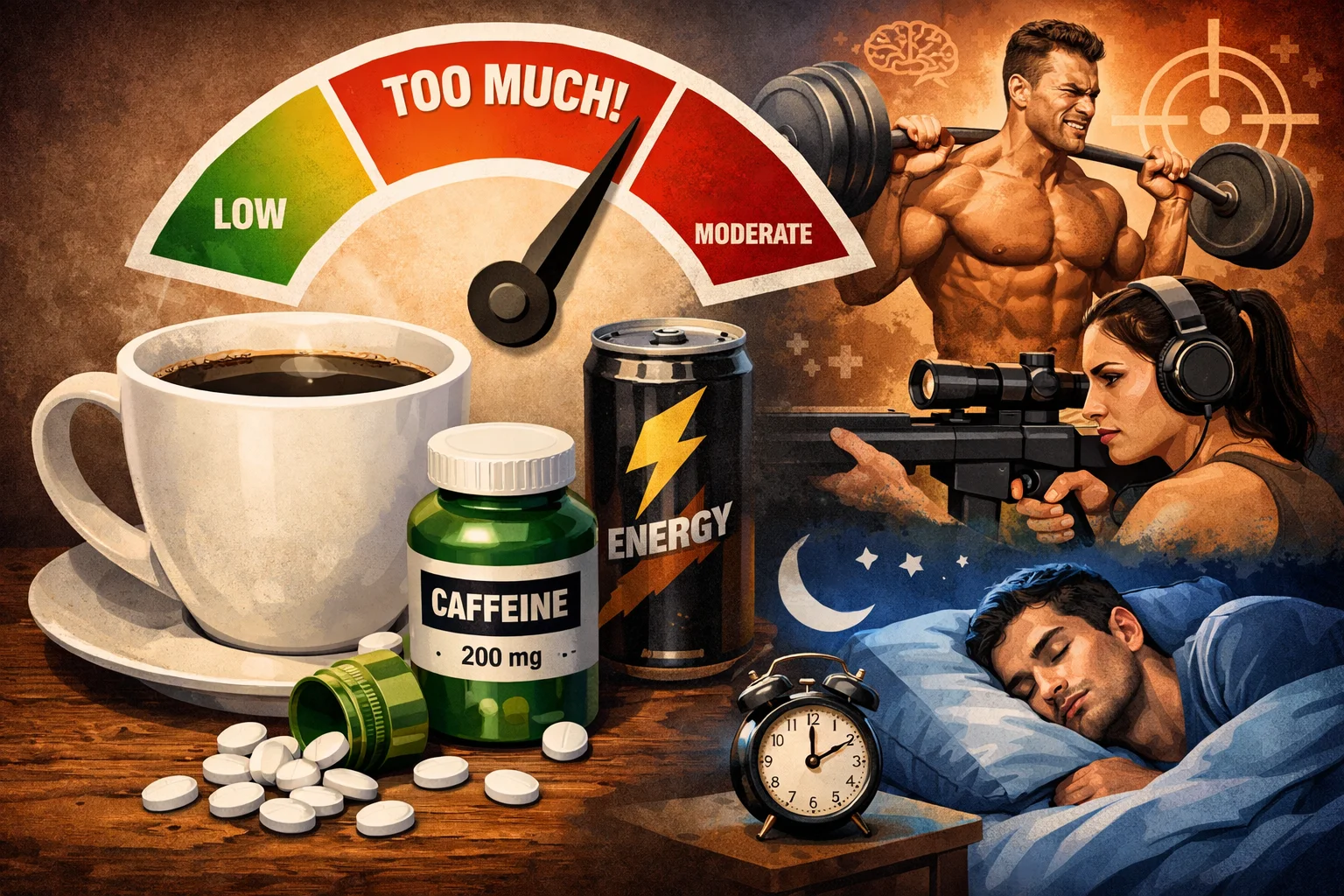
Caffeine can sharpen focus, lift mood, and make hard sessions feel a little easier. But the line between helpful and too much is thinner than most people think. This guide helps you find the sweet spot without harming sleep or recovery.
Why caffeine works
Caffeine blocks adenosine, a brain signal that builds sleep pressure. When adenosine is muted, you feel more alert and effort feels lower. It can also increase adrenaline and improve neuromuscular drive, which is why performance often improves during strength or high effort work.
The performance range
Most people see benefits in the range of 1 to 3 mg per kg of body weight. Going higher does not always give more benefit and often increases side effects. Many people feel good results with a single small dose, especially if they do not use caffeine daily.
Timing matters more than dose
Caffeine has a half life of about 5 to 7 hours. That means if you take a big dose in the afternoon, a large amount is still active late at night. Even if you fall asleep, deep sleep and recovery can suffer. A safe rule is to stop caffeine 8 to 10 hours before bed. If you are sensitive, stop earlier.
Signs you crossed the line
- Jittery hands or shaky legs
- Elevated resting heart rate or pounding heartbeat
- Anxiety, irritability, or racing thoughts
- Stomach upset or nausea
- Trouble falling asleep or staying asleep
- A hard crash later in the day
Caffeine and strength results
Caffeine can make heavy sets feel lighter, but the biggest gains still come from consistent training, nutrition, and sleep. Use caffeine as a tool, not a crutch. On days when sleep was poor, adding more caffeine does not fix recovery debt, it only hides it.
Caffeine and fat loss
Caffeine may slightly increase energy expenditure and reduce appetite for a short time, but the effect is small. It cannot replace nutrition habits. The best use is to support training quality and daily activity.
How tolerance builds
Daily use reduces the effect. If you need more and more to feel normal, it is time to reset. A short break of 7 to 14 days can restore sensitivity. Some people do well with a two day break each week.
Hidden sources
Caffeine is not just coffee. Energy drinks, pre workouts, some teas, and even chocolate can add up. Read labels and keep a simple daily total.
Who should be cautious
People with anxiety, high blood pressure, heart rhythm issues, pregnancy, or sleep disorders should be careful and consult a clinician. Also be cautious if you mix caffeine with certain medications or supplements.
Practical takeaways
- Start low and increase only if needed.
- Avoid late day caffeine to protect sleep.
- Use it for sessions where focus and intensity matter most.
- If your sleep quality drops, cut back first.
Caffeine can be a useful performance ally when it is timed and dosed well. The goal is alertness and focus, not a wired feeling. If you can train hard, recover well, and sleep deeply, you have found the right balance.