
Sleep and Recovery: The Missing Pillar for Fat Loss, Muscle Gain, and Pain-Free Training
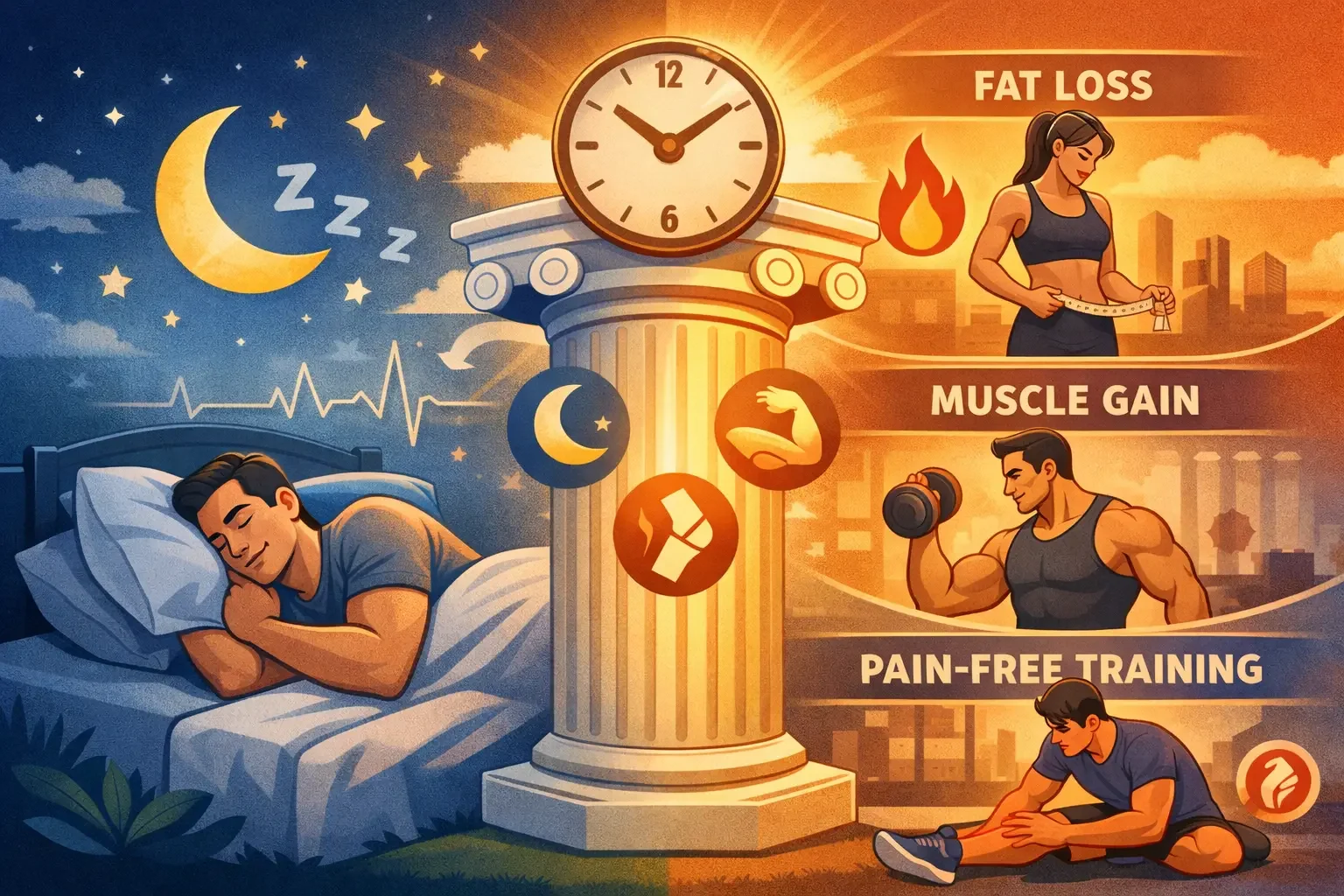
Most people focus on training hard and eating clean, but the results you want are built during recovery. Sleep and recovery are the missing pillar for fat loss, muscle gain, and pain-free training. If you are always tired, sore, or stuck at the same numbers, your body is telling you that recovery is the bottleneck.
Why recovery drives results
Training creates stress in the body. Your muscles, connective tissue, and nervous system need time to repair and adapt. This is when strength improves, muscle grows, and your joints feel better. Without enough recovery, your body stays in a stressed state. That makes progress slower and increases injury risk.
Key benefits of proper recovery include:
- Faster muscle repair and growth
- Better hormone balance for fat loss and energy
- Lower inflammation and less joint pain
- Sharper focus and better workout performance
Signs you are under-recovering
You do not need a smartwatch to know when recovery is missing. Watch for these signs:
- Constant soreness that lasts more than 2 to 3 days
- Worse performance from one workout to the next
- Elevated resting heart rate or feeling wired at night
- Low motivation, irritability, or brain fog
- Increased aches in the back, knees, or shoulders
If several of these show up together, it is time to adjust your sleep, workload, or both.
Sleep basics that make the biggest difference
Sleep is the highest return recovery tool you have. Aim for 7 to 9 hours most nights. If that sounds impossible, start with consistency and quality.
- Same sleep and wake time: A steady schedule improves deep sleep.
- Light management: Get daylight early, dim lights at night, and avoid bright screens 60 minutes before bed.
- Caffeine timing: Stop caffeine 6 to 8 hours before sleep.
- Wind down routine: A short walk, stretch, or light reading helps your nervous system relax.
- Cool room: Most people sleep better in a slightly cooler room.
Rest days are not wasted days
Rest days do not mean doing nothing. They mean lowering intensity so your body can repair and adapt. Active recovery keeps you moving without adding extra stress.
Good rest day options:
- Easy walking and light mobility work
- Gentle cycling or swimming
- Breathing drills to reduce stress and muscle tension
If you train hard, plan a deload week every 4 to 8 weeks. Reduce total volume by 30 to 50 percent and keep the weights lighter. You will come back stronger, not weaker.
Nutrition that supports recovery
Recovery is not only sleep. Fuel matters. Make sure you are not under-eating when your training load is high.
- Protein: 1.6 to 2.2 g per kg of body weight supports muscle repair.
- Carbs: Carbs refill muscle glycogen and improve training quality.
- Hydration: Even mild dehydration can increase soreness and fatigue.
A simple weekly plan for better recovery
If you train 4 days per week, try this structure:
- Day 1: Strength training
- Day 2: Strength training
- Day 3: Active recovery or rest
- Day 4: Strength training
- Day 5: Strength training
- Day 6: Active recovery
- Day 7: Full rest
This balance allows progress while keeping joints and energy levels stable. A personal trainer can adjust this plan around your lifestyle, stress, and goals.
FAQ: common recovery questions
Will I lose progress if I rest? No. Rest is where progress happens. One to two rest days each week usually improves results.
Do I need supplements? Start with sleep, food, and stress management. Supplements help only after the basics are covered.
How do I know if I should reduce training? If your sleep is poor, soreness is constant, or performance drops, reduce volume for a week.
Bottom line
Training is the signal, but recovery is the result. If you want fat loss, muscle gain, and pain-free training, prioritize sleep and recovery the same way you prioritize your workouts. At OneToOneFit, we help clients train hard and recover smart so results actually last.